Can Your Tattoo Be Covered? Understanding Cover-Up Feasibility and What Makes a Good Candidate
Not every tattoo can be successfully covered—and that’s the honest truth you deserve to know before investing time and money in a cover-up tattoo consultation.
After twenty years, I’ve learned that realistic expectations matter far more than optimistic promises. Some tattoos are excellent candidates for cover-up work. Others require strategic planning, laser pre-treatment, or a complete reimagining of what’s possible. Understanding which category your tattoo falls into saves you frustration, protects your skin, and ensures you end up with results you’ll actually love!
The most common question I hear is simple: “Can my tattoo be covered?” The answer depends on multiple factors including the size, color saturation, age, and location of your existing tattoo. Let’s break down what makes a tattoo coverable and what realistic expectations look like for different scenarios.
What Makes a Tattoo a Good Cover-Up Candidate?
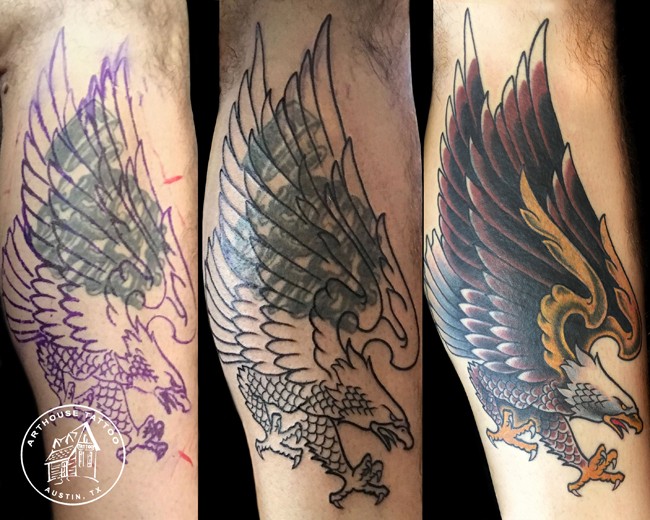
The best candidates for cover-up tattoos share several characteristics that give us creative freedom and technical advantage. Old, faded tattoos offer the most flexibility because the ink has lightened significantly over time, creating a neutral base we can work with. Simple designs with minimal shading are easier to incorporate into new artwork than heavily saturated pieces. Smaller tattoos obviously present fewer challenges than large-scale work, though size alone doesn’t determine feasibility.
Light-colored tattoos—think yellows, light greens, pastels, or faded blues—can often be covered with medium to dark tones without laser pre-treatment.
Tattoos with open space between elements give us room to build negative space into the new design, making the transformation feel more natural. Single-layer tattoos without previous cover-up attempts tend to respond better because the ink hasn’t been repeatedly deposited in the same area.
Challenging Cover-Up Scenarios That Require Strategic Planning
Some tattoos push the boundaries of what’s feasible without additional preparation.
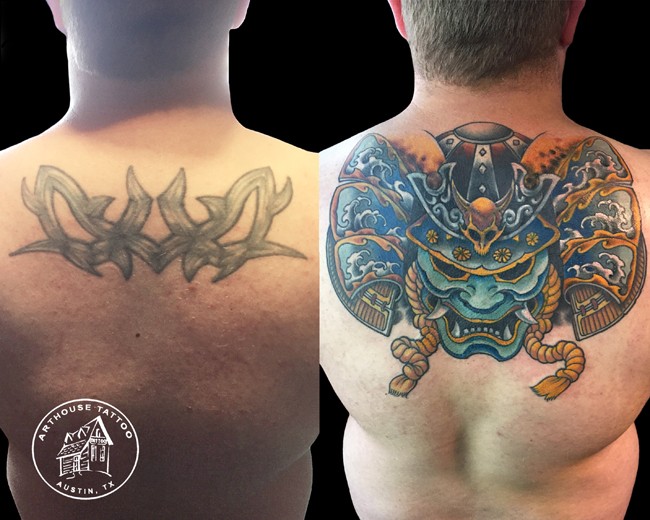
Solid black tattoos, tribal designs, or heavy blackwork present significant challenges because dark ink can only be covered with equally dark or darker colors. This dramatically limits your design options and requires careful artistic planning. Fresh tattoos less than two years old still contain vibrant, saturated pigment that resists being masked by new ink layers.
Brightly colored tattoos—especially reds, oranges, and purples—often show through lighter colors even after multiple sessions. Deep blue and green tattoos can be particularly stubborn, requiring either laser lightening or incorporation into the new design rather than complete concealment. Previously covered tattoos carry multiple layers of ink that complicate the technical approach and may require custom tattoo design solutions that work with rather than against the existing layers.
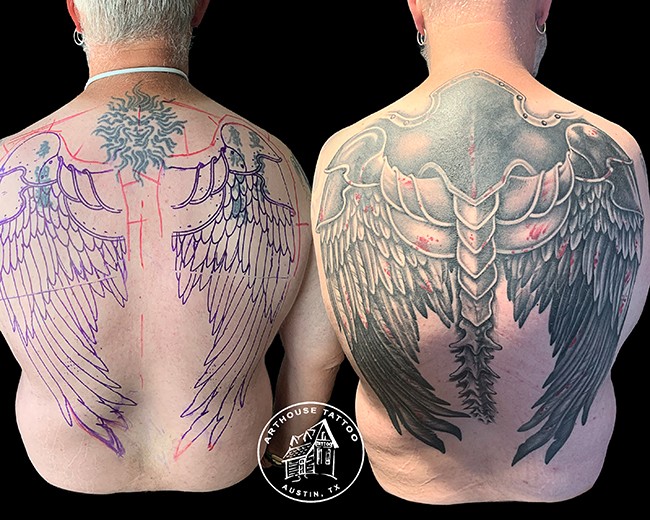
Large-scale tattoos like full back pieces or sleeve tattoos require significantly more artistic planning and often multiple sessions to achieve quality results. Locations with limited skin real estate—fingers, behind ears, ankles—restrict how much larger the new design can be, which directly impacts what’s technically possible.
The Size Reality: Why Your Cover-Up Will Be Larger
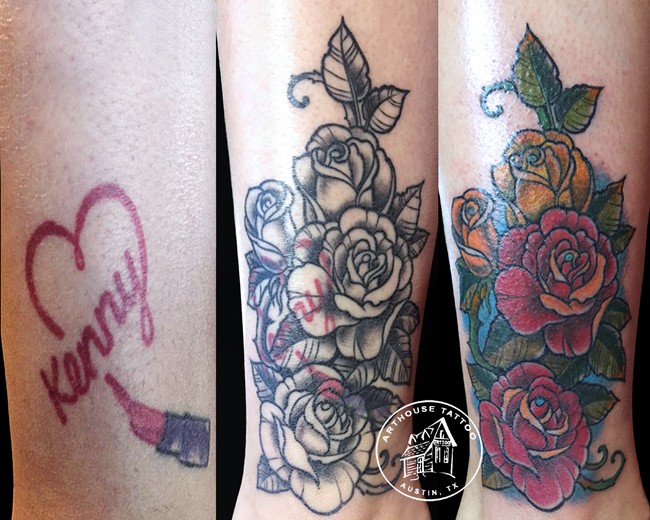
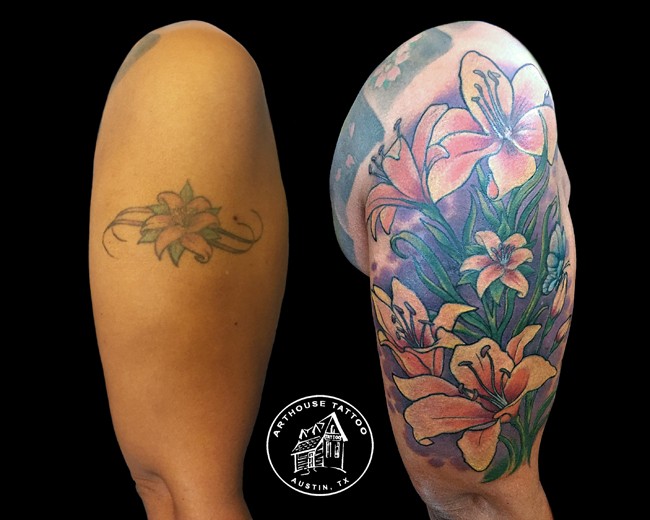
Here’s a truth that surprises many clients: your cover-up tattoo will need to be two to three times larger than what you’re covering. This isn’t a sales tactic or artistic preference—it’s a technical requirement. Covering existing ink demands we use sufficient new pigment density to mask what’s underneath, which means more coverage area and often bolder design elements.
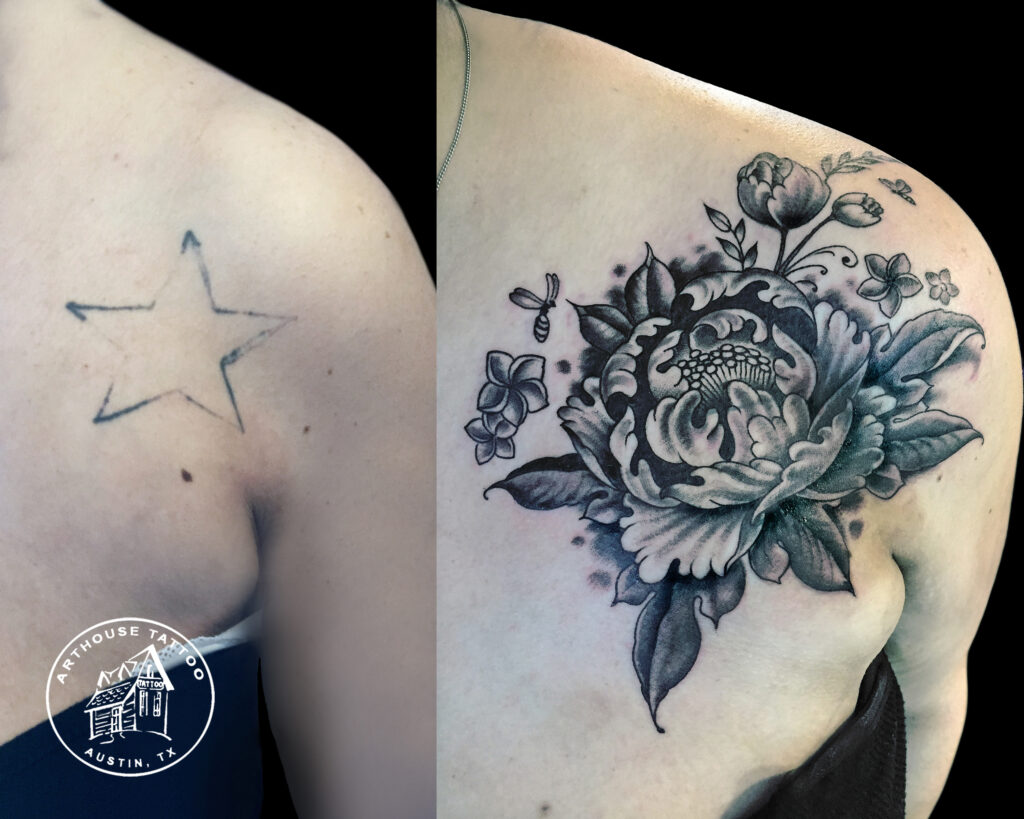
A small three-inch tattoo on your wrist might require a five to seven-inch design to adequately conceal it. That butterfly on your shoulder blade could become a nine-inch mandala or floral piece. The original tattoo will influence the shape and boundaries of your new design, even if you can’t see it in the final result. This size consideration affects both the aesthetic outcome and the investment required, which is why understanding it upfront prevents disappointment later.
When Laser Removal Should Come First
Often for clients, my most honest recommendation is to lighten the tattoo with a few laser removal sessions before attempting a cover-up.
This isn’t always necessary, but it dramatically expands your design options and improves the final result’s quality. Laser treatment works particularly well for solid black tattoos you want covered with something lighter or more colorful, heavily saturated pieces less than five years old, tattoos in highly visible areas where you want maximum design flexibility, or when you’re committed to a specific artistic style that requires a cleaner canvas.
Modern laser technology can significantly fade most tattoos in three to five sessions, though complete removal isn’t always necessary for cover-up purposes—we just need to lighten the existing ink enough to give us creative freedom.
The investment in laser pre-treatment often pays off in the quality and longevity of your final cover-up design, making it worth considering if you’re pursuing a complex or light-colored new tattoo.
Cover-Up Styles That Work Best
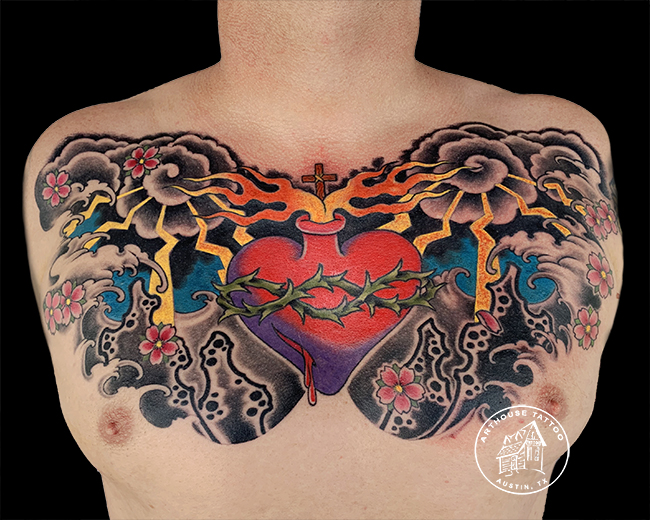
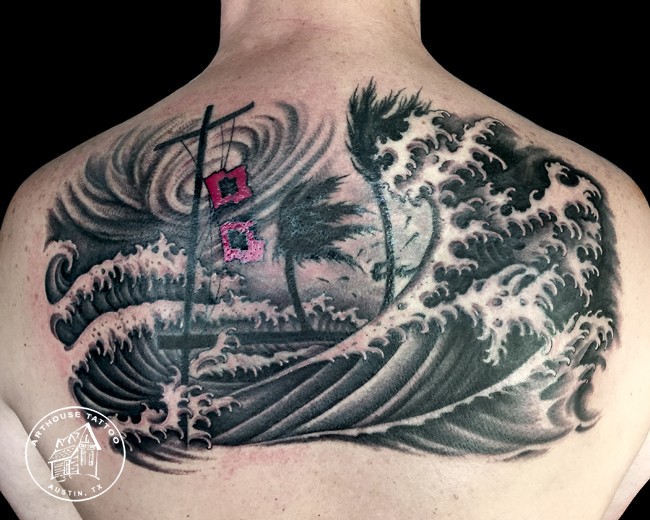
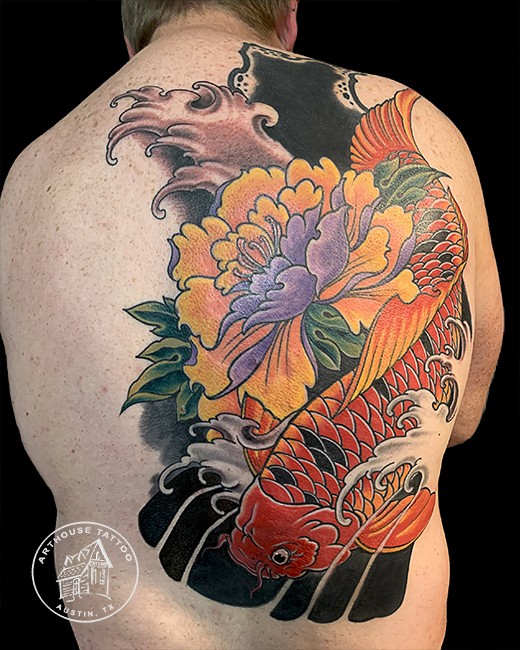
Certain tattoo styles naturally lend themselves to cover-up work better than others. Japanese-inspired designs excel at cover-ups because they traditionally incorporate bold lines, solid color blocks, and strategic negative space that can mask existing tattoos while maintaining artistic integrity.
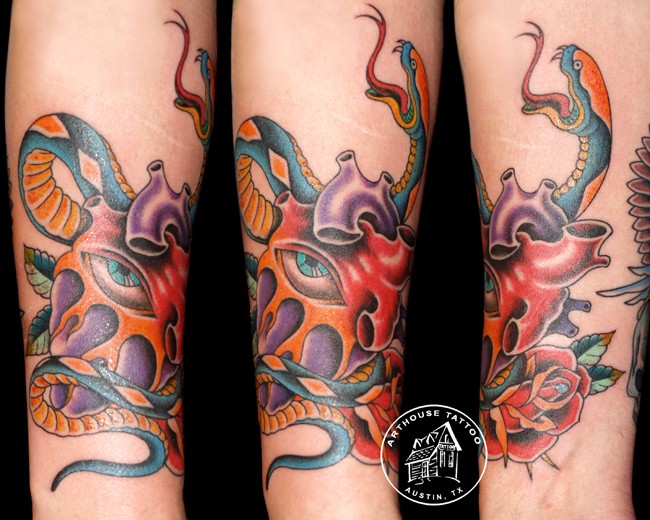
American Traditional tattoos work brilliantly for their heavy black outlines and solid color fills that provide excellent coverage. Neo-traditional and illustrative styles offer enough bold elements to cover effectively while allowing creative freedom in composition.
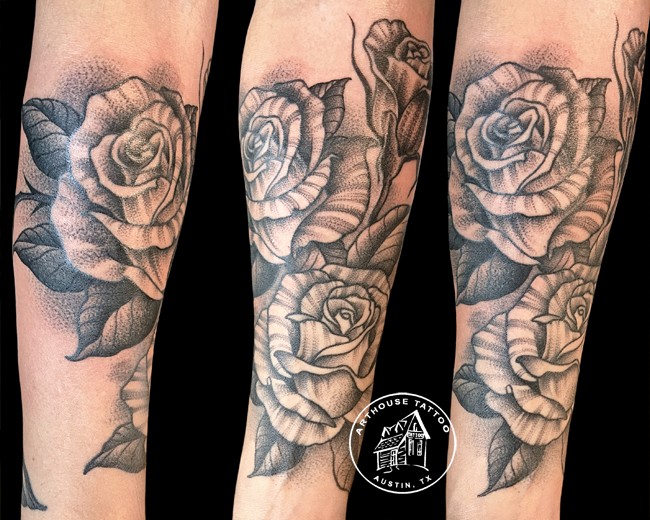
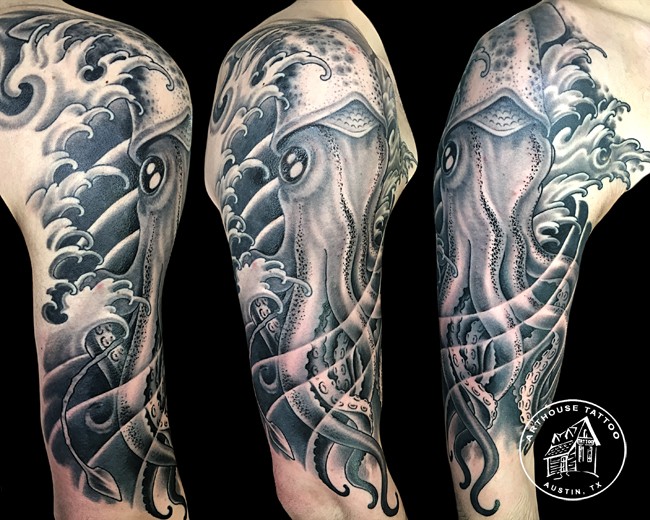
Realistic designs in black and grey can incorporate existing tattoo elements as shadows or darker tones, making them disappear into the overall composition. Mandala and geometric patterns use repetitive elements and solid fills that strategically conceal what’s underneath. Nature scenes—florals, animals, landscapes—provide organic shapes and varied density that naturally accommodate covering previous work.
During your tattoo consultation, we can explore which styles best suit your specific cover-up situation while honoring your personal aesthetic preferences and the technical requirements of your existing tattoo!
Questions to Ask During Your Cover-Up Consultation
Coming prepared to your free consultation helps us give you the most accurate assessment and realistic plan. Start by asking: “Based on my tattoo’s size, color, and saturation, what are my realistic coverage options?” This opens an honest conversation about what’s actually feasible versus what you’re hoping for.
Ask about specific design styles that would work best for your situation. “Which tattoo styles will give me the best coverage and longest-lasting results?” helps you understand your creative options within technical limitations. Inquire about timeline expectations: “Will this require multiple sessions, and how far apart should they be spaced?” Large or complex cover-ups often need staged approaches for optimal results.
Don’t hesitate to ask about laser pre-treatment: “Would a few laser sessions improve my options or the final result?” Sometimes this recommendation genuinely expands what’s possible and results in artwork you’ll love more. Finally, discuss pricing transparency: “What’s the estimated total investment including all sessions?” Understanding the complete financial commitment prevents surprises!
Your Next Steps for Cover-Up Success
If you’re considering a cover-up, start by taking clear, well-lit photos of your existing tattoo from multiple angles. This helps during your consultation by letting us assess the technical challenges and creative possibilities before you arrive. Think about what styles appeal to you aesthetically—browse portfolios, save inspiration images, and come with an open mind about how your vision might need to adapt to what’s technically feasible.
Be prepared to discuss your timeline, budget, and willingness to consider laser pre-treatment if recommended. These practical considerations help us create a realistic plan that gets you from regrettable ink to artwork you love.
Most importantly, schedule a consultation where you can have an honest conversation about your specific situation without pressure or unrealistic promises. At ArtHouse Tattoo, we offer free consultations precisely because these discussions work best when you can explore options, ask questions, and understand the complete process before making any commitments. Your cover-up journey starts with realistic expectations and ends with artwork that transforms not just your tattoo, but your relationship with your body art.
Ready to turn that old tattoo into something you’re proud of? Book your free consultation with ArtHouse Tattoo today and let’s start planning a design you’ll love for years to come.
Frequently Asked Questions
Can any tattoo be covered up without laser removal?
Not all tattoos can be successfully covered without laser pre-treatment. Light-colored, faded, or smaller tattoos generally work well for direct cover-ups. However, solid black tattoos, heavily saturated pieces, or very dark colors often benefit from a few laser sessions to lighten the ink first, which significantly expands your design options and improves the final result quality. The decision depends on your specific tattoo and the design style you’re hoping to achieve.
How much bigger does a cover-up tattoo need to be than the original?
Cover-up tattoos typically need to be two to three times larger than the original tattoo to adequately mask the existing ink. A three-inch tattoo might require a six to nine-inch cover-up design. This size increase is a technical necessity, not an artistic preference, as covering old ink requires sufficient new pigment density and coverage area to successfully conceal what’s underneath.
What tattoo styles work best for cover-ups?
Japanese-inspired designs, American Traditional, neo-traditional, realistic black and grey work, mandala patterns, and nature scenes tend to work best for cover-ups. These styles incorporate bold lines, solid color blocks, varied density, and strategic negative space that naturally conceals existing tattoos. Delicate fine-line work, watercolor styles, and light, airy designs typically struggle when placed over existing ink.
How long does a cover-up tattoo take to heal?
Cover-up tattoos typically take slightly longer to heal than fresh work on unmarked skin—usually an extra week or two beyond the standard two to three-week healing period. The skin has already been traumatized by previous tattooing, which affects how it accepts new pigment. Proper aftercare becomes even more critical for cover-ups to ensure optimal healing and color retention.
Will my old tattoo show through after my cover-up heals?
In most professional cover-ups, the original tattoo remains completely concealed after healing. However, with extremely dark or heavily saturated original work, very faded outlines might become slightly visible under certain lighting conditions after complete healing. This doesn’t indicate a failed cover-up but reflects the reality of layering ink over existing pigment. Quality work minimizes this possibility significantly.
How much more expensive are cover-up tattoos?
Cover-up tattoos typically cost thirty to fifty percent more than equivalent-sized original work due to the technical complexity, additional design time, and specialized expertise required. If laser pre-treatment is recommended, expect additional costs of two hundred to six hundred dollars per session. Complex cover-ups might also require multiple tattooing sessions, each charged separately as the piece develops.
Should I get laser removal before attempting a cover-up?
Laser pre-treatment isn’t always necessary but dramatically expands design options for solid black tattoos, heavily saturated pieces less than five years old, or when you want maximum creative flexibility. Modern laser technology can significantly fade most tattoos in three to five sessions. Complete removal isn’t required—we just need to lighten the existing ink enough to provide creative freedom for the cover-up design you envision.